Professor Govender will serve on the Scientific and Technical Advisory Group (STAG) of the UNDP/UNFPA/UNICEF/WHO/World Bank Special Programme of Research, Development and Research Training in Human Reproduction (HRP).
University of KwaZulu-Natal (UKZN) Professor Kaymarlin Govender has been appointed to a leading international advisory group focused on research and policy in human reproduction.
Professor Govender will serve on the Scientific and Technical Advisory Group (STAG) of the UNDP/UNFPA/UNICEF/WHO/World Bank Special Programme of Research, Development and Research Training in Human Reproduction (HRP).
His three-year appointment, from 2027 to 2029, recognises more than two decades of contributions to behavioural science, health systems, health policy, HIV and AIDS, and sexual and reproductive health research.
Professor Govender is Research Director at UKZN’s Health Economics and HIV/AIDS Research Division (HEARD), within the College of Law and Management Studies. He has worked extensively across sub-Saharan Africa, providing research and technical support to governments, non-governmental organisations, multilateral agencies and advocacy groups.
UKZN Executive Director of Corporate Relations, Dr Normah Zondo, congratulated Professor Govender, saying the appointment reflects the depth and international relevance of the scholarship produced at the university.
“We are proud to see Professor Govender’s expertise recognised at this level of the global health research community. His appointment reflects the depth of scholarship being produced at UKZN and the value of research grounded in the realities of African communities and health systems,” said Dr Zondo.
“It also provides a platform for UKZN to contribute to international discussions on research priorities that have direct implications for health policy, health systems and the lives of people across the world.”
Contributing to Global Research Priorities
In his new role, Professor Govender will help review HRP’s scientific and technical work, advise on research priorities and approaches, and assess the quality, relevance and potential impact of the programme’s activities.
He said the appointment presents an opportunity to ensure that global research agendas remain responsive to the realities of communities in low- and middle-income countries, including those across Africa.
“I hope to bring a constructive and context-sensitive perspective to this work, informed by the realities of South Africa and the wider African region,” he said.
Professor Govender’s research examines not only whether health interventions are effective, but also whether they are affordable, cost-effective, sustainable and capable of being delivered through existing health systems.
“Research priorities must reflect the lived experiences of communities affected by poverty, gender inequality, stigma, violence and limited resources,” he said.
“I also hope to strengthen the recognition of evidence produced in low- and middle-income countries, including Africa, where researchers and communities have valuable knowledge and experience to share with the world.”
Professor Govender has previously worked with several international health and development partners, including UNAIDS, UNFPA, UNICEF, the United States Centers for Disease Control and Prevention, the Global Fund and the Wellcome Trust.
“We congratulate Professor Govender on this significant international appointment and look forward to the contributions he will make to HRP’s work,” said Dr Zondo.
“His appointment brings distinction to UKZN while creating another avenue for our research expertise to contribute to global health priorities.”
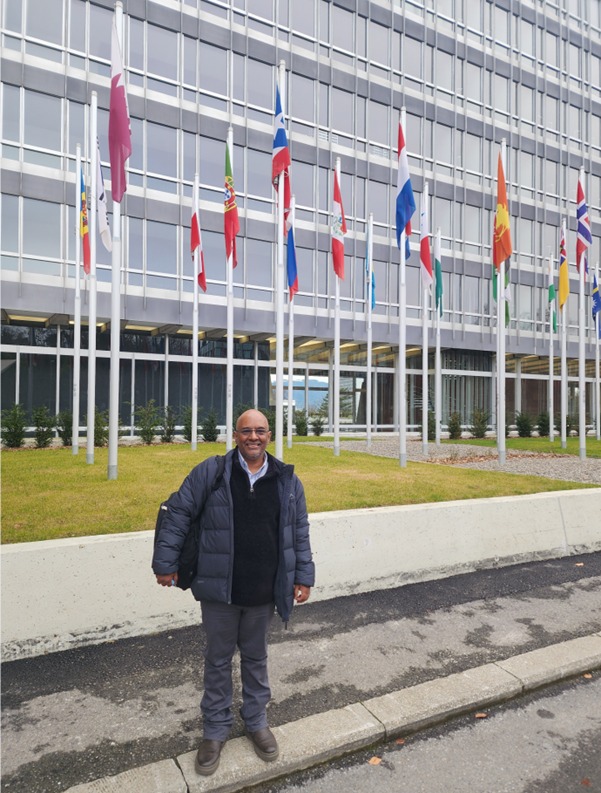
Photo caption: Professor Kaymarlin Govender at the World Health Organization headquarters in Geneva, Switzerland.
About HEARD
The Health Economics and HIV/AIDS Research Division operates at the intersection of research, policy and advocacy. It works with research and advocacy organisations to develop innovative ideas and help transform them into practical policies aimed at addressing Africa’s significant burden of disease.
HEARD examines the economic dimensions of some of Africa’s most persistent health challenges, including HIV and AIDS, gender-related vulnerabilities, adolescent health, intimate partner violence and health-related disabilities, particularly those associated with medication used to manage chronic diseases.